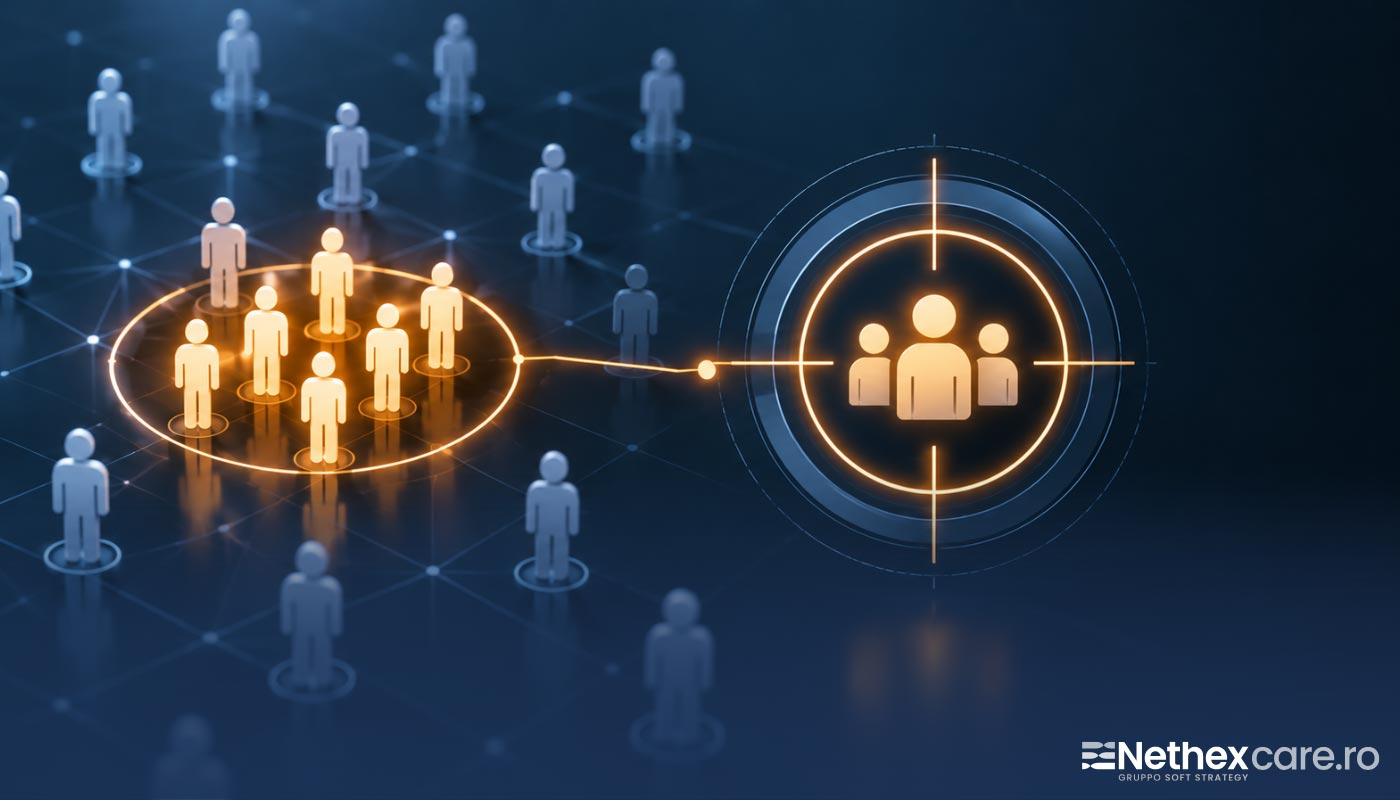
A contact list is never uniform: it contains both customers who will buy and customers who never will
There comes a point, often difficult to pinpoint, when a sales campaign begins to lose effectiveness even though, on the surface, nothing seems to have changed. Agents continue to work with the same intensity. Contact rates remain within the expected range. The CRM continues to fill up with notes, outcomes, appointments scheduled and rescheduled. And yet, something is off: conversions gradually decline, acquisition costs rise almost imperceptibly, and team morale deteriorates week after week, without anyone being able to identify a clear cause.
At that point, theories begin to multiply: the script, training, seasonality, competitors. Meetings follow one another, often without producing convincing answers. One question remains: are we doing something wrong?
In most cases, the answer is yes. But the problem does not lie in the sales techniques, the script or agent training. It is far more structural: the organisation is selling to the wrong people. And the most frustrating part is that the data needed to recognise this had already been there for some time.
The problem no one wants to see
Contact centres and BPO organisations managing outbound sales or customer acquisition processes operate with very large volumes of contacts. This scale is both their strength and one of their main sources of inefficiency. The more contacts an organisation manages, the easier it becomes to lose sight of the quality of each individual lead and rely on targeting approaches based on historical or demographic criteria, or simply inherited from previous campaigns.
As a result, a significant share of the sales effort is focused on customer segments with a low propensity to buy, limited lifetime value, or even customers who are already using a competing product against which it is difficult to compete on equal terms. A great deal of work produces very few conversions. Meanwhile, customers with the right profile — those who would have responded, purchased and perhaps renewed — remain outside the list, or are contacted too late, at the wrong time and with the wrong message.
What the data are really telling you
Every interaction handled by a contact centre is designed to generate data, whether the call is answered or rejected. The data reveal response times, reasons for negative outcomes and support tickets opened after the sale. They also show which products were returned, which contracts were cancelled within the first ninety days, how many calls were required before achieving a meaningful contact, and how conversion rates vary by time of day, channel or customer profile.
In most organizations, these data are already fully available. They are stored and sometimes reported on, but are far less frequently analysed systematically to build a more accurate targeting model.
The gap is methodological rather than technical. Experts consistently point out that the objective is not to collect more data, but to learn how to interrogate the data already available by asking the right questions. Instead of focusing only on “How many calls did we make today?”, organisations should also be asking: “Which of today’s calls resemble the calls that, in the past, generated high-lifetime-value customers?”
From problem to solution: building a propensity model
The first practical step is to stop treating every lead in the same way. A contact list is never homogeneous: it contains profiles with radically different probabilities of conversion. Identifying those differences before the campaign begins is the foundation of any effective data-driven approach.
How can this capability be developed? Through a propensity model: a system that assigns each contact a purchase probability score based on observable variables, including demographic, behavioural, historical and contextual data.
Even relatively simple models can be built with standard analytics tools by comparing the characteristics of customers who converted in the past with those of new contacts currently on the list. More advanced models incorporate machine learning techniques and update scores in near real time as new interactions take place.
In both cases, the practical outcome is the same: sales resources are no longer distributed evenly across the entire list. Instead, they are concentrated on segments
with the highest probability of success. Work volumes decrease. Conversion rates increase. Acquisition costs fall.
Segmentation is not enough: timing matters
Purchase propensity is not static. It changes in response to events, renewal cycles and changing circumstances. A customer who rejected an offer six months ago may be ideally positioned to receive the same offer today if, in the meantime, something has changed in their professional, family or personal circumstances.
Advanced contact centre systems can detect these signals. A customer engaging with specific content through a digital channel, opening an email about a particular product, or calling to request related information is exhibiting behaviours that can serve as indicators of a window of opportunity.
Incorporating these signals into the targeting model and making them available to the agent at the moment of contact turns a blind sales attempt into a relevant and timely conversation.
The role of data quality
No model can perform effectively when it relies on inaccurate data. One of the most underestimated — and potentially most valuable — investments an organisation can make is improving the quality and consistency of CRM data.
Duplicate records, incomplete fields, outdated customer information and call outcomes recorded inconsistently all introduce noise into the model and reduce its predictive power.
Before asking which algorithms should be applied, organisations should first assess the condition of their existing information assets.
A structured review of contact data and historical outcomes is often the most productive starting point. It almost always reveals immediate opportunities for improvement, regardless of any further investment in technology
From analysis to action: embedding insight into operations
The final step is turning analysis into concrete operational behaviour. More accurate segmentation delivers little value if the information fails to reach the agent at the right time and in a usable format.
This requires dialling systems, CRM platforms and analytics tools to work together seamlessly. Contact priority should be determined by the propensity score. The customer profile should be visible to the agent before the call begins. Outcomes should be recorded in a structured way and fed back into the model’s update cycle.
It is a circular process rather than a linear one: every interaction feeds the system, making it progressively more accurate.
Companies that have successfully completed this integration report significant improvements across the main campaign performance indicators, including conversion rates, cost per qualified lead and the average value of acquired customers.
Data, like mathematics, are not a matter of opinion
Continuing to sell to the wrong customer is expensive. It carries a financial cost, because human and technological resources are spent on contacts that will never convert. It also carries a reputational cost, because poorly timed or irrelevant outreach creates friction and damages brand perception.
The tools required to perform better already exist in almost every contact centre and BPO organisation. What makes the difference is the willingness to interrogate existing information assets with greater precision and to design operational processes capable of turning those answers into action. The objective remains the same: to transform data analysis from a reporting requirement into an awareness that the organisation already holds its most reliable commercial map.


